Endoscopy
Endoscopy
What is an Upper GI endoscopy / OGD?
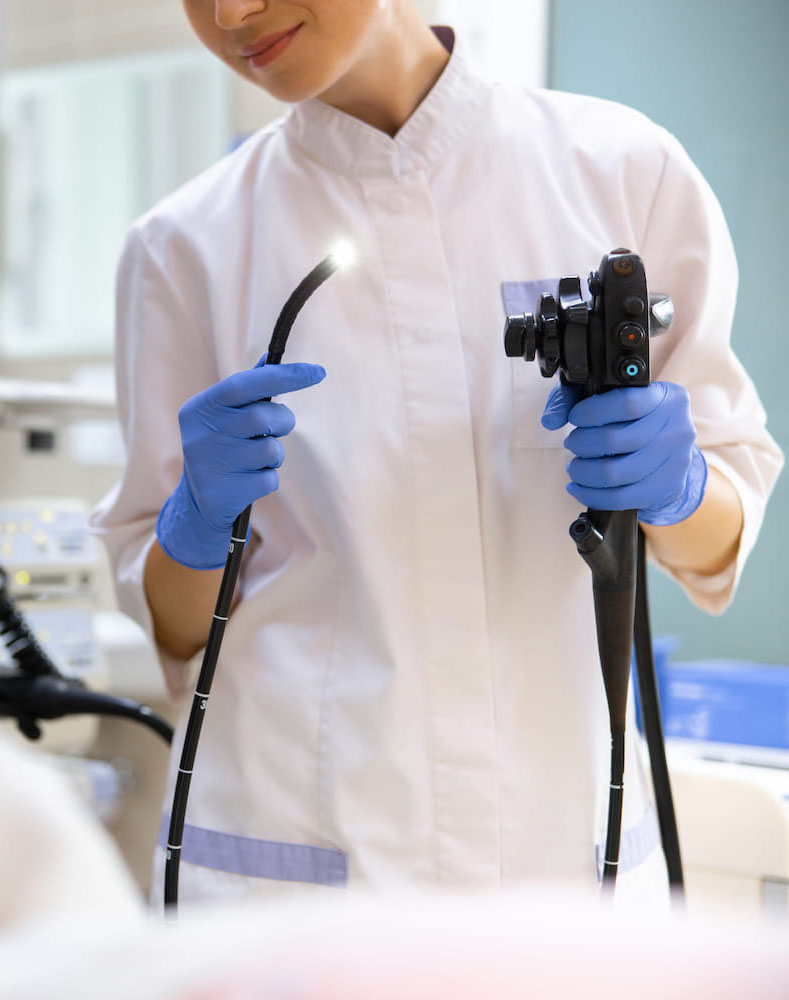
Upper GI Endoscopy is a commonly performed telescopic camera procedure to look at the inside of the ‘upper’ Gastro-Intestinal tract. It is also called an OGD as it allows to examine the Oesophagus (gullet), Gastric (stomach) and Duodenum (first part of small bowel).
When / why will I need an OGD / Upper GI endoscopy?
If you have any of the following symptoms, you will need to see a GP / a specialist to discuss the need for an endoscopy
- Difficulty swallowing
- Heartburn (severe / long lasting)
- Indigestion
- Feeling full after small meals
- Chest discomfort after meals
- Unexplained anaemia (low blood count)
- Weight loss
- Vomiting blood
- Passing black stool
- For treatment of a previously diagnosed condition
Consult your GP or Mr Jayanthi for further assessment of your symptoms and the need for endoscopy. Mr Jayanthi is an expert in Upper GI endoscopy.
Therapeutic Endoscopy
Therapeutic endoscopy means that the endoscopy is performed to treat certain conditions or do procedures endoscopically. Endoscopy is widely used for treatments of several conditions. Mr Jayanthi is an expert in the following Therapeutic Endoscopy procedures.
This procedure is performed for the patients who have Barrett’s (insert a link to the Barrett’s page) oesophagus and biopsies have shown presence of abnormal cells (dysplasia). The procedure involves passing a special catheter to burn the inner surface lining of the oesophagus (gullet). When the cells regrow after this, they regrow into the normal inner lining thus reducing the risk of developing cancer. The procedure can be performed either under local anaesthetic / sedation or may need a general anaesthetic.
This procedure involves removing early cancer from either the gullet or the stomach. This may involve either an EMR (Endoscopic Mucosal Resection) or ESD (Endoscopic Sub-mucosal Dissection).
EMR involves injecting a special solution under the inner lining to lift the area of interest from deeper tissues. A special device is then used to suck the tissue into a cap and apply a rubber band. A cautery snare is applied, and the tissue is cut below the rubber band. The specimens are retrieved and sent off the laboratory to be looked under a microscope to assess the tissue removed.
ESD involves a more deeper resection. ESD is performed instead of EMR depending on how the area / lesion looks on endoscopy.
This procedure involves stretching scar tissue that has been causing difficulties swallowing. The scar tissue could either be due to previous procedures, long running acid reflux or radiotherapy. The dilatation can be either performed using a balloon or a bougie.
This procedure involves placing a feeding tube into the stomach. This is a commonly performed procedure for patients who can’t eat normally either temporarily or permanently due to various conditions. Stroke and throat cancer needing radiotherapy are amongst the common conditions where patients will benefit from PEG.
This procedure is done for patients who have developed difficulty in swallowing due to oesophageal cancer and are not suitable for surgery for various reasons. Placing a stent improves quality of life significantly by allowing patients to eat and drink as normal as possible.
All therapeutic procedures come with a higher risk of bleeding, perforation and causing strictures. Mr Jayanthi will explain all these risks in the clinic before the procedure.

Diagnostic Endoscopy
In this section, the procedure that is done to establish a diagnosis is discussed.
The procedure lasts about 5 – 10 mins at the most. It can be performed under local anaesthetic spray to the back of the throat or under sedation. Very rarely it is done under full general anaesthetic if it only for diagnosis.
A mouth guard is placed to protect both the telescope and your teeth. There will be at least two nurses looking in the room at the time of the procedure. One will be looking after you and the other one will be helping the doctor to perform the procedure. You will be connected to blood pressure monitor as well as a pulse oximeter, which measures both your pulse and oxygen concentrations in your blood.
The procedure starts off by passing the telescope on the top of your tongue and into the back of your throat. Then it is taken past the throat into your gullet, stomach and the duodenum. A thorough examination is performed. Biopsies may be taken. Photos of different parts will be taken which will form part of the report that will be written at the end of the examination.
The most difficult part of this procedure is when the telescope passes behind your voice box and you feel as if you are choking. In fact, the scope doesn’t affect your breathing at all! If you focus on your breathing, taking slow and deep breaths, the procedure will be done within a few minutes. Many patients get worried leading up to the procedure and then wonder what the fuss was all about after they have had it.
The nurse and the doctor will keep talking to you throughout the procedure. If you have had the procedure after a local anaesthetic spray, the doctor will be able to explain the findings straightaway. However, if you had the procedure under sedation, the results might be given after you have fully recovered from the sedation or on another day.
In the vast majority an OGD is a safe procedure. However, as will any procedure there are always risks involved. These include the risk of bleeding, perforation (hole through the GI tract), aspiration (secretions / saliva going into the windpipe) as well as allergic reactions to any of the medicines given before or during the procedure.
You can go home straight away if the procedure is done after a local anaesthetic throat spray. In fact, you can drive to and back. However, if you have had any sedation or had the procedure under a general anaesthetic, you will be kept in the hospital until you have recovered, and it is safe for you to go home. You will NOT be able to drive yourself home and therefore need someone to drop and pick you up after the procedure.
Mr Jayanthi performs OGD / Upper GI endoscopy regularly in his practice. He trains junior doctors in performing this procedure. Mr Jayanthi also performs a variety of endoscopic treatments. Click on Therapeutic Endoscopy (link) to read more.