Weight Loss
Weight Loss Surgery
Obesity is a leading cause of morbidity and mortality worldwide. Morbid obesity is described as Body Mass Index (BMI) of > 35. BMI is calculated by dividing weight in kilograms divided by the square of height in meters.
Bariatric Surgery is proven to be a safe and effective way to loose weight, sustain weight loss and improve quality of life. Surgery for obesity is now proven to improve conditions such as Diabetes, High Blood Pressure & Arthritis. National Institute for Health & Clinical Excellence (NICE) has published guidelines for those who will benefit from Obesity Surgery.
Am I suitable for an operation?
If your BMI is above 40 or above 35, but have obesity related health problems, you are suitable for surgery. There is emerging evidence that surgery is beneficial for patients with lesser BMI.
How does a weight loss operation work?
The operation works with a combination of decreasing the size of the stomach and more importantly changes in your gut hormones. Gut hormones are chemicals that the made by the stomach and bowel in response to food or hunger and speak to the brain. Following these operations, the hunger hormones are suppressed and satiety ('I dont need to eat') hormones are increased.

Which operation?
This depends on a number of issues. An ideal operation would result in effective & sustained weight loss with minimal risks and side effects. Mr Jayanthi, will have a detailed discussion about your health, expectations and the most suitable operation for you.
Mr Jayanthi, is experienced in a wide range of operations (including Gastric bypass & Sleeve gastrectomy) and also performs revisional bariatric surgery. Therefore, you can discuss various options and mutually decide on the most suitable operation.

Not happy with my previous operation. Do I have any options?
This depends on a number of issues. An ideal operation would result in effective & sustained weight loss with minimal risks and side effects. Mr Jayanthi, will have a detailed discussion about your health, expectations and the most suitable operation for you.
Mr Jayanthi, is experienced in a wide range of operations (including Gastric bypass & Sleeve gastrectomy) and also performs revisional bariatric surgery. Therefore, you can discuss various options and mutually decide on the most suitable operation.
Types of Surgeries
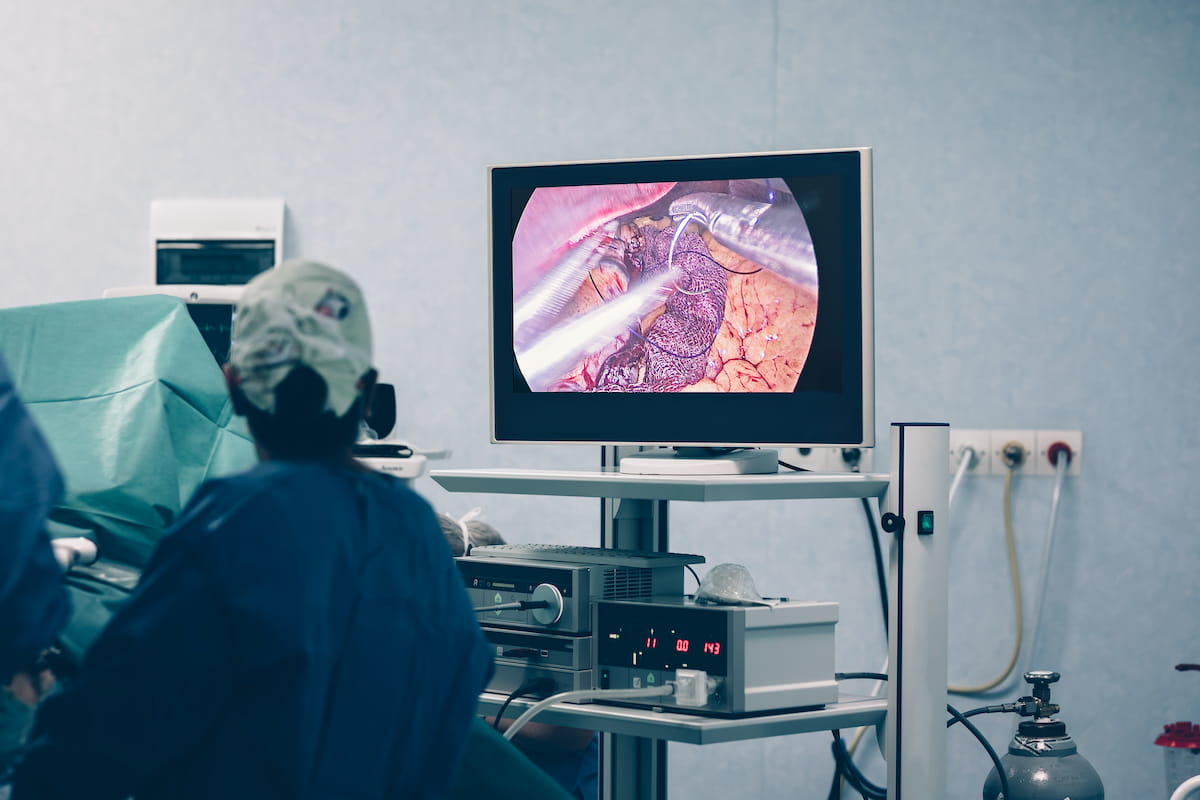
Sleeve gastrectomy is a procedure, where the stomach is stapled. As a result, the stomach (which is ‘bag’ shaped) is changed into a ‘tube’. The capacity of the stomach is significantly reduced. This results in feeling full even after a small meal and hence reducing the volume of food eaten each meal time.
Furthermore, research has also shown that following this operation, hunger is suppressed. There is also evidence that all the obesity associated health problems improve significantly following sleeve gastrectomy.
Risks on this operation include that of leak from the staple line, injury to liver, spleen and bowel.
Mr Jayanthi performs this operation using keyhole techniques. The patient stays in the hospital for about 1-2 days following the operation.
Adjustable gastric band is one of the commonest operations performed worldwide.
Why is it called ‘adjustable’?
Adjustable gastric band consists of a plastic ring with a balloon, which goes around the upper part of the stomach. This is connected to a port underneath the skin. The balloon in the band offers the ‘adjustability’. The band is filled with saline to cause a small gastric pouch above the band. This will make patients feel full even after small meals. The optimal amount of inflation or filling of the band varies with each patient. If the band is under filled you are able to eat more. On the other extreme you will not be able to swallow if the band is over filled. Therefore, it is important to achieve a happy medium. This can take anywhere from a few months to a year.
What are the risks?
This procedure is safe and most of the patients will be able to go home either later the same day or after overnight stay. There are however some risks as with any other operations. Specific to this operation, there is a chance of injury to the stomach, spleen and liver during the operation. Liver diet will go a long way to minimise the chances of injury to the liver.
The port site under the skin can get infected. This infection can then track down to the band and may only be treatable by removal of the band. Therefore careful aseptic technique should be employed while filling or de-filling of the band.
Slippage, erosion, infection
In the long run, there are chances of the band slipping over the stomach. This can result in vomiting, unable to swallow, and or weight regain. In some instances this can lead to the band eroding into the stomach. Patient can become very unwell as a result of the erosion. Urgent medical help from an expert is essential in this situation. The port can also get infected as a result of the erosion with the infection tracking from within.
How successful?
Overall, adjustable gastric band can achieve significant & sustained weight loss. Gastric band matches and in some cases can do better than a gastric bypass in terms of weight loss. Patient with diabetes can see improvements in the condition as they loose weight.
Gastric Bypass combines the effects of both restriction & a mal-absorption. In this operation, stomach is reduced in size and bowel is re-routed in a fashion that food bypasses stomach and enters small bowel (often called roux-en-Y).
Following Gastris Bypass, patients not only feel full even after small meals but their calorie absorption is decreased. Research has shown that, gastric bypass also results in a number of changes in the gut hormone signals. The collective effects of these changes include early satiety (feeling full) and decrease in hunger. This results in healthy eating and assist patients to loose weight effectively and more importantly results in sustained the weight loss.
Gastric Bypass improves all obesity-associated conditions. The effect on diabetes is most striking. Type 2 Diabetes improves almost immediately after Gastric Bypass. This effect on Diabetes is unique to Gastric Bypass (of all the weight loss operations). High blood pressure, high cholesterol, reflux, weak heart improve in over 90% of the patients after Gastric Bypass. A recent study has confirmed that heart condition also improves following gastric bypass. Quality of life improves with patients more active in their day-to-day life, at work and in society.
Risks of this operation include join leaks, injury to bowel, stomach, liver and spleen. Mr Jayanthi performs Gastric bypass using keyhole techniques. Patients can be discharged after 48hrs.
Gastric Sleeve
A gastric sleeve surgery is a restrictive procedure where the size of your stomach is reduced therefore limiting the amount of food you can eat which will help towards weight loss.

Gastric Band
A gastric band involves dividing your stomach into two by placing a silicone band around the stomach therefore creating a small pouch at the top of your stomach (roughly the size of a golf ball).

Gastric Bypass
In the UK, the most common gastric bypass surgery is a combination of restrictive and malabsorptive procedure procedures called Roux-en-Y (RYGB) which creates a two-way weight reducing effect.