
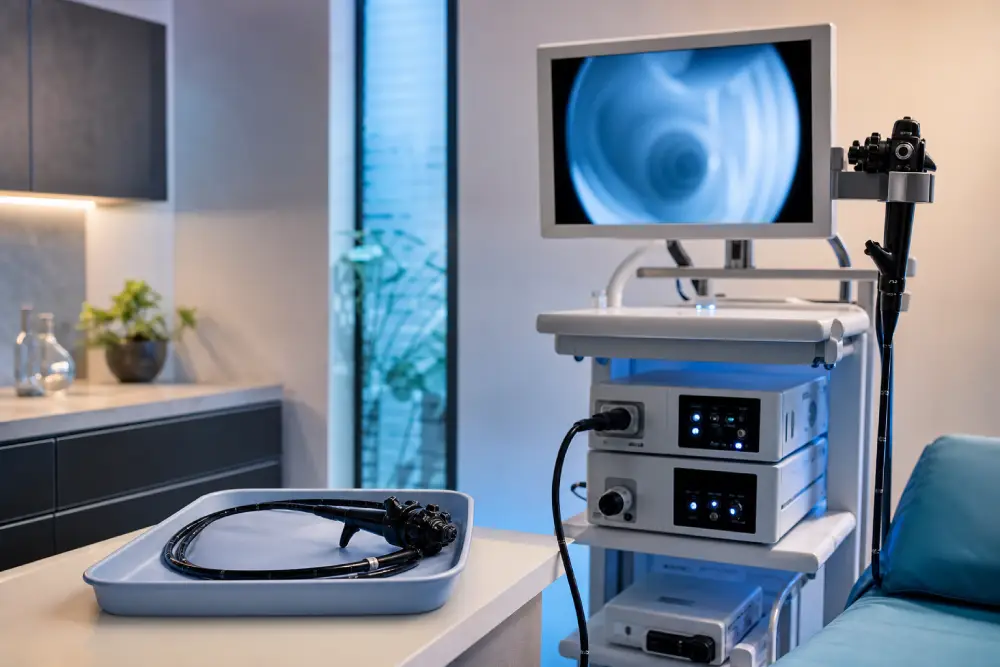
What is Endoscopy?
An upper gastrointestinal endoscopy also known as a gastroscopy is a procedure in which a thin, flexible camera (endoscope) is passed gently through the mouth to examine the oesophagus, stomach, and the first part of the small intestine (duodenum).
Mr Jayanthi performs both diagnostic endoscopy to investigate and identify conditions and therapeutic endoscopy, where treatment is delivered through the same procedure without the need for open surgery.
Mr Jayanthi specialises in advanced endoscopic techniques including EMR, ESD, and radiofrequency ablation treating early cancer and pre-cancerous conditions without open surgery.
Diagnostic Endoscopy
Diagnostic endoscopy is used to investigate symptoms and identify conditions of the upper digestive tract. Mr Jayanthi may recommend diagnostic endoscopy if you experience any of the following:
- Persistent acid reflux or heartburn not responding to medication
- Difficulty swallowing (dysphagia) — food sticking or a feeling of obstruction
- Unexplained upper abdominal pain or discomfort
- Nausea, vomiting, or unexplained weight loss
- Vomiting blood or passing black, tarry stools
- Anaemia with no clear cause
- Surveillance following a diagnosis of Barrett's oesophagus or gastric polyps
During diagnostic endoscopy, Mr Jayanthi can examine the oesophageal and stomach lining, take biopsies (small tissue samples) for laboratory analysis, and diagnose conditions including acid reflux, hiatus hernia, gastritis, peptic ulcers, and Barrett’s oesophagus.
- Therapeutic Endoscopy
Where a condition is identified that requires treatment, Mr Jayanthi can in many cases treat it through the same endoscopic procedure avoiding the need for open surgery. Therapeutic endoscopic procedures include:
- Radiofrequency Ablation (RFA / HALO)
Used to treat Barrett’s oesophagus a pre-cancerous change in the lining of the oesophagus caused by long-term acid exposure. Probes are passed through the endoscope to deliver controlled radiofrequency energy, burning away the pre-cancerous cells and allowing healthy tissue to regenerate.
- Endoscopic Mucosal Resection (EMR)
An endoscopic procedure to remove early-stage cancerous or pre-cancerous lesions from the lining of the oesophagus or stomach. The lesion is lifted and cut away without open surgery. Performed as a day-case procedure under sedation.
- Endoscopic Submucosal Dissection (ESD)
A more advanced endoscopic technique used to remove larger or more complex lesions from the gastrointestinal lining in a single piece. ESD allows more precise removal of early cancers and significantly reduces the risk of recurrence.
- Oesophageal Stenting
For patients with advanced or inoperable oesophageal cancer, Mr Jayanthi can place a stent to open the oesophagus — allowing the patient to swallow food, drink, and saliva and significantly improving quality of life.
- Haemostasis (Stopping Bleeding)
Therapeutic endoscopy can be used to stop bleeding from ulcers or other lesions within the upper gastrointestinal tract.
- Dilatation
Endoscopic dilatation can be used to widen a stricture (narrowing) of the oesophagus, improving swallowing in patients with benign or malignant obstruction.
What to Expect
You will need to fast for at least 6 hours before the procedure. The procedure is performed using local anaesthetic throat spray and/or light sedation and typically takes 10–20 minutes. For therapeutic procedures such as EMR or ESD, it may take longer.
There is typically no overnight stay required. Most patients receive results and a clear management plan on the same day. If sedation is given, a responsible adult must accompany you home and you should not drive for 24 hours.
Diagnosis
Endoscopy is itself a diagnostic tool. Where further investigation is required following endoscopy, Mr Jayanthi may arrange additional imaging such as CT scan, CT-PET scan, or endoscopic ultrasound (EUS) depending on findings.
Treatment
Where endoscopy identifies a condition requiring further management, Mr Jayanthi will discuss the most appropriate treatment pathway which may include further endoscopic treatment, medication, surveillance, or surgery. The treatment pathway is tailored entirely to your individual diagnosis and circumstances.