
What is a Hernia Repair Surgery?
A hernia occurs when an internal organ or fatty tissue pushes through a weakness in the surrounding muscle or tissue wall. The most common types include inguinal (groin), umbilical, incisional, and ventral hernias. Symptoms include a visible lump, discomfort, and pain with straining or lifting.
Mr Jayanthi trained as Senior Laparoscopic Fellow at the ICENI Centre, Colchester one of the UK’s foremost centres for advanced keyhole surgery and brings that expertise to hernia patients across Essex.
The Procedure
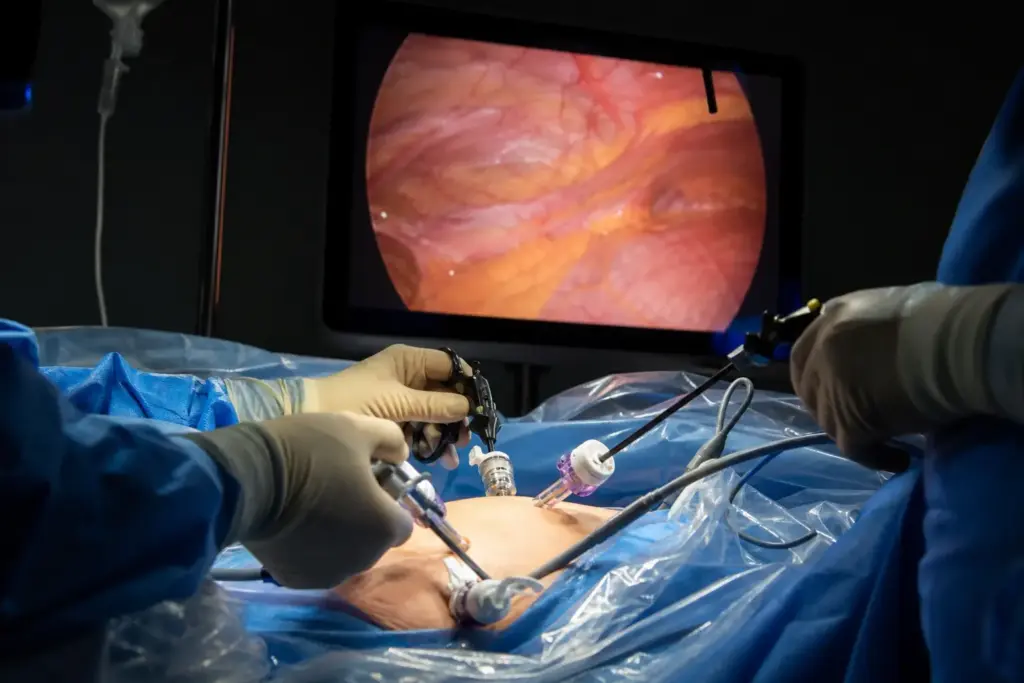
Mr Jayanthi performs laparoscopic (keyhole) hernia repair using modern mesh techniques. Small incisions are made and a mesh is placed to reinforce the weakened area, significantly reducing the risk of recurrence. The approach TEP (totally extraperitoneal) or TAPP (transabdominal preperitoneal) is selected based on the type and size of the hernia.
The procedure is performed under general anaesthesia and typically takes 30–60 minutes depending on complexity.
What to Expect
Most patients are discharged the same day or the following morning. You can expect to return to light activities within 1–2 weeks and full normal activity within 4–6 weeks. Heavy lifting should be avoided for 6 weeks.
Laparoscopic repair offers significantly less post-operative pain and a faster recovery compared to traditional open hernia repair.
Risks & Complications
Potential risks include:
- Bleeding or infection
- Injury to surrounding structures (nerves, vessels)
- Chronic groin pain
- Recurrence of the hernia
- Rare mesh-related complications
Mr Jayanthi will discuss all risks in detail during your consultation and tailor the approach to your specific hernia type and circumstances.