
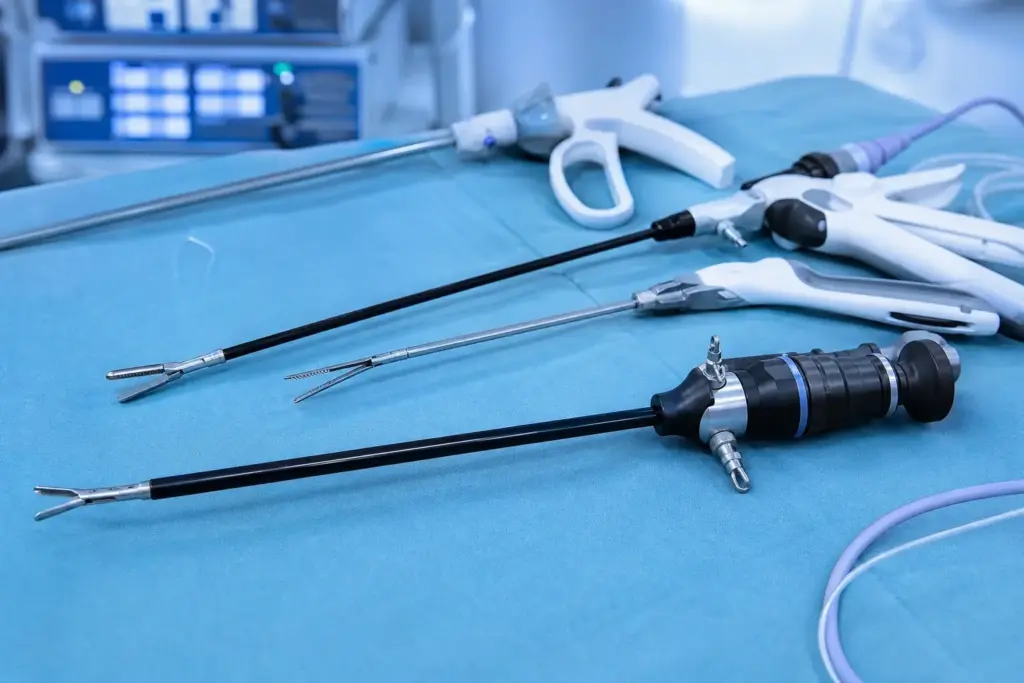
Acid reflux surgery, called a fundoplication, strengthens the valve at the bottom of the food pipe so acid stops washing back up. It is a keyhole operation for people whose reflux is confirmed by tests and is not well managed by medicines. Acid reflux surgery Essex residents arrange with Mr Jayanthi starts with tests, not an operation.
Mr Naga Venkatesh Jayanthi, a consultant upper GI surgeon, performs fundoplication in Chelmsford and Colchester. He also works within the RefluxUK network of specialist surgeons. Before any decision, he checks that reflux really is the cause of your symptoms.
| Question | Answer |
|---|---|
| What is it? | A keyhole wrap that reinforces the valve above the stomach |
| Who is it for? | Confirmed reflux not well controlled by medicines |
| How long does it take? | Usually 60 to 90 minutes under general anaesthetic |
| Hospital stay | Usually 1 to 2 nights |
| Back to normal | Light activity in 2 to 3 weeks, most things by 6 |
What Is Acid Reflux Surgery?
Gastro-oesophageal reflux disease (GORD) means acid from the stomach keeps rising into the food pipe. The NHS heartburn and acid reflux page describes the burning chest pain, sour taste and cough it can cause.
In a fundoplication, the top of the stomach (the fundus) is folded around the lower end of the food pipe and stitched. This tightens the valve so acid stays in the stomach. A full 360° wrap is known as a Nissen. Partial wraps go only part of the way round. Mr Jayanthi chooses the type that suits your anatomy and test results.
Reflux Symptoms and When You Need Urgent Help
Reflux is common and usually not dangerous. Some symptoms alongside it need prompt checks.
| Your symptom | Possible cause | What to do |
|---|---|---|
| Heartburn most days | Ongoing acid reflux (GORD) | See your GP or book directly |
| Food getting stuck in the throat | Narrowing or inflammation of the food pipe | Urgent GP appointment or NHS 111 |
| Losing weight for no reason | Needs checking for other causes | Urgent GP appointment or NHS 111 |
| Frequent vomiting | Possible blockage or ulcer | Urgent GP appointment or NHS 111 |
| Vomiting blood | Bleeding in the stomach or gullet | Call 999 or go to A&E |
| Fever and shivering after surgery | Infection or sepsis | Call 999 or go to A&E |
Reflux Conditions Mr Jayanthi Treats
- GORD: reflux confirmed by tests, see heartburn and reflux.
- Reflux with a hiatus hernia: repaired in the same operation, see hiatus hernia repair.
- Medicine-dependent reflux: people who do not want lifelong acid-reducing tablets.
- Medicine side effects: people who cannot tolerate acid-reducing medicines.
- Barrett's oesophagus: long-term reflux changes in the lining, monitored by endoscopy.
If tests show the hernia itself is the main problem, the hiatus hernia page explains that operation in more detail. Long-standing reflux is also linked to cancer of the food pipe and stomach, which is why alarm symptoms are always checked first. See the full list of treatments for his other operations.
Treatment Options for Acid Reflux
Lifestyle changes
Smaller, more frequent meals and not eating in the 3 or 4 hours before bed often help. Losing weight if needed, stopping smoking and propping up the top end of your bed by 10 to 20cm help many people.
Pharmacy medicines
Antacids and alginates give short-term relief and tend to work for longer when taken with or soon after food. Using them every day for months is not advised.
Prescribed acid-reducing medicines
A GP may prescribe a proton pump inhibitor (PPI), usually for 4 or 8 weeks, to cut how much acid the stomach makes. Some people need a long-term prescription.
Keyhole fundoplication
You are asleep for this operation, and the surgeon works through 5 small cuts in the upper abdomen. It usually takes 60 to 90 minutes. A full or partial wrap is chosen to fit your anatomy and symptoms.
Fundoplication with hernia repair
If a hiatus hernia is present, the stomach is first returned below the diaphragm and the opening narrowed before the wrap is made.
Why Patients Choose Mr Jayanthi for Reflux Surgery
- Tests before surgery: endoscopy, manometry and 24-hour pH monitoring confirm reflux before he recommends an operation.
- Choice of wrap: full or partial fundoplication, matched to how your food pipe works.
- RefluxUK specialist partner: reflux surgery offered both independently and within the RefluxUK network.
- Specialist societies: founding member and Joint Secretary of the Indian Foregut Surgeons of Great Britain and Ireland.
- Research grounding: postdoctoral research at the University of Oxford, and an ALSGBI David Dunn Scholarship.
Is Acid Reflux Surgery Worth It?
People often search for whether reflux surgery is worth it. NICE guidance is a useful guide. It says a laparoscopic fundoplication can be considered when reflux is confirmed and medicines control it, but you do not want to keep taking them long term. It can also be considered when reflux responds to medicine you cannot tolerate.
In other words, surgery suits people whose diagnosis is certain. It is less likely to help if the symptoms come from something other than acid. That is why the tests matter.
The trade-off is a few weeks of soft food, a short hospital stay, and for some people bloating or difficulty burping. Mr Jayanthi will talk through what you might gain and what you might notice afterwards.
Alternatives to Reflux Surgery
Most people manage reflux without an operation. Lifestyle changes, pharmacy remedies and prescribed acid-reducing medicines from a GP are enough for many. If one medicine does not help, a doctor may try another type. Surgery is a choice, not a requirement, for most people with reflux.
What Happens With Reflux Surgery, Step by Step
- Consultation: about 30 minutes discussing your symptoms, medicines and what you have already tried.
- Tests: an endoscopy, then manometry and 24-hour pH monitoring to confirm reflux and check the food pipe muscles.
- Team review: Mr Jayanthi reviews the results and recommends a full or partial wrap, or no surgery.
- Your decision: time to consider the benefits, side effects and recovery before booking.
- Surgery day: the wrap is made by keyhole surgery, and most people go home after 1 or 2 nights.
Recovery and Risks After Acid Reflux Surgery
Mr Jayanthi advises a soft or liquid diet for 4 to 6 weeks after a fundoplication. Expect to be doing light things again by week 2 or 3. Work, exercise and everyday routines usually return by 4 to 6 weeks.
A University Hospitals Birmingham leaflet explains that swelling after the operation makes swallowing difficult for everyone at first. The NHS has more on swallowing problems. It usually improves in a month or so. The same leaflet notes a full wrap carries a higher chance of gas bloat and difficulty burping than a partial one.
Other risks include bloating, reflux symptoms returning and, rarely, the need for a further procedure. Blood clots and wound infection are risks of any operation. The general anaesthesia explains the anaesthetic side. Before you leave hospital, the ward team goes through pain relief, wound care and the eating plan. A follow-up visit with Mr Jayanthi checks your swallowing, your weight and whether you still need any reflux medicine.
| Treatment | Hospital stay | Example risk |
|---|---|---|
| Full (360°) fundoplication | 1 to 2 nights | Gas bloat or difficulty burping |
| Partial fundoplication | 1 to 2 nights | Reflux symptoms returning |
| Fundoplication with hernia repair | 1 to 2 nights | Temporary difficulty swallowing |
| Pre-surgery pH and pressure tests | None | Nasal discomfort from the probe |
Where Mr Jayanthi Sees Reflux Patients
Acid reflux surgery Essex consultations take place at 3 hospitals. You can see Mr Jayanthi privately at Springfield Hospital, Chelmsford, on Monday, Wednesday or Friday, or at Oaks Hospital, Colchester, on Saturday. His NHS clinic is at Broomfield Hospital on Monday, for people referred by their GP. Contact the secretaries on 01245 234412 for further details.
Clinic hours, in UK local time, are Monday 6:00–8:00pm, Wednesday 2:00–7:00pm and Friday 2:00–4:30pm. Contact the secretaries for further details.
| Location | Address |
|---|---|
| Springfield Hospital, Chelmsford, private clinic | Lawn Lane, Springfield, Chelmsford, Essex CM1 7GU |
| Oaks Hospital, Colchester, private clinic | 120 Mile End Road, Colchester CO4 5XR |
| Broomfield Hospital, Chelmsford, NHS clinic | Court Road, Broomfield, Chelmsford CM1 7ET |
Acid Reflux Surgery Fees and Insurance
Consultations are from £250 and follow-up appointments from £150, confirmed when you book. Reflux tests and surgery are quoted separately in writing, so you know the 2026 costs before going ahead.
| Item | Fee |
|---|---|
| Initial consultation | From £250 |
| Follow-up appointment | From £150 |
| Treatment or surgery | Self-pay package quoted in writing after your consultation |
| Insured patients | Bupa, AXA Health, Aviva, Vitality, Cigna, Allianz, Healix, WPA and other UK insurers. Check your policy |
FAQs About Acid Reflux Surgery
How long does it take to recover from reflux surgery?
Most people return to light activities within 2 to 3 weeks and to normal life within 4 to 6 weeks. Swallowing usually improves over the first month as swelling settles.
When can I drive after a fundoplication?
Once you can wear a seatbelt and make an emergency stop without pain. Many people manage this after about 2 weeks. Check with the team at your follow-up.
Is a fundoplication major surgery?
It is a keyhole operation lasting 60 to 90 minutes under general anaesthetic, with a stay of 1 to 2 nights. It is planned well ahead, after tests.
Can reflux come back after surgery?
Yes, for some people reflux symptoms return over time. Some may need medicine again or, rarely, a further procedure. Mr Jayanthi discusses this openly before surgery.
Can acid reflux be treated without surgery?
For most people, yes. Lifestyle changes, pharmacy remedies and prescribed acid-reducing medicines control symptoms well. Surgery is considered when these are not suitable long term.
How much does private reflux surgery cost?
The cost depends on the tests needed, the type of wrap and the hospital stay. A written price follows the consultation, before you commit to anything.
Will I still need reflux tablets after surgery?
Many people find they need fewer tablets or none, but this varies. Some need medicine again later. Do not stop prescribed medicines before surgery unless told to.
Why do I need a pH test before surgery?
It measures how much acid reaches the food pipe over 24 hours. This confirms reflux is the cause of your symptoms before an operation is offered.
What can I eat after a fundoplication?
Liquids first, then purée, then soft food, building to a normal diet at around 6 weeks. Avoid fizzy drinks and chew food well.
Can I get reflux surgery on the NHS?
Yes, if your GP refers you to a specialist. Mr Jayanthi sees NHS patients at Broomfield Hospital. Private patients can book directly.
Book a Consultation About Reflux Surgery
To talk through reflux surgery, fill in the appointment request, write to the team via the contact form or phone 01245 234412. Food that keeps sticking, or weight loss you cannot explain, needs a prompt GP or NHS 111 review. Vomiting blood or signs of sepsis, such as fever with confusion, mean 999 or A&E.