
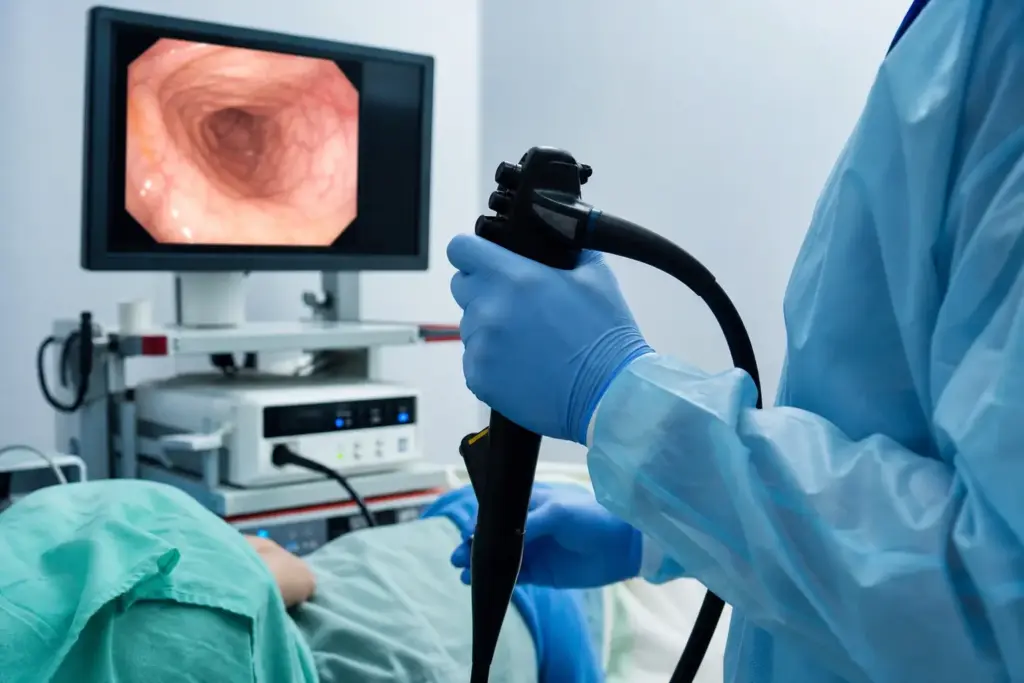
An upper GI endoscopy, also called a gastroscopy, uses a thin flexible camera passed through the mouth to look at the food pipe, stomach and first part of the small bowel. It finds the cause of symptoms such as indigestion, swallowing trouble or bleeding, and some problems can be treated during the same test. Endoscopy Essex appointments with Mr Jayanthi can be arranged privately or through a GP referral.
As a consultant upper GI surgeon, Mr Naga Venkatesh Jayanthi carries out diagnostic and therapeutic tests. This includes removing early cancers and pre-cancerous areas through the scope, so some people avoid major surgery.
| Question | Answer |
|---|---|
| What is it? | A camera test of the gullet, stomach and duodenum |
| Why have it? | Indigestion, swallowing problems, bleeding or a cancer check |
| How long does it take? | Often 10 to 20 minutes for a standard test |
| Comfort | Throat spray, light sedation or both |
| Going home | Same day, with an adult if you had sedation |
What Is an Upper GI Endoscopy?
The endoscope is a flexible tube about the width of a little finger, carrying a tiny camera and light. As the NHS gastroscopy guide explains, it can check what is causing digestive symptoms, treat problems and look for cancers of the stomach or food pipe.
Small tissue samples (biopsies) can be taken painlessly during the test. Bleeding can be stopped, narrowings widened and growths removed. A gastroscopy is one of several scope tests, and the NHS endoscopy page describes the others, such as colonoscopy for the large bowel.
Symptoms Worth Checking and When to Get Urgent Help
A gastroscopy is often arranged for symptoms that persist or come with warning signs. Some problems after the test need urgent care.
| Your symptom | Possible cause | What to do |
|---|---|---|
| Indigestion that will not settle | Reflux, ulcer or inflammation | See your GP or book directly |
| Food sticking when swallowing | Narrowing or growth in the gullet | Urgent GP appointment or NHS 111 |
| Black, sticky stools | Bleeding higher in the gut | Urgent GP appointment or NHS 111 |
| Vomiting blood | Bleeding in the stomach or gullet | Call 999 or go to A&E |
| Severe chest or abdominal pain after the test | Possible tear in the gut lining | Call 999 or go to A&E |
| Fever and shivering after a procedure | Infection or sepsis | Call 999 or go to A&E |
Conditions Mr Jayanthi Diagnoses and Treats Through the Scope
- Reflux and inflammation: damage to the food pipe lining, see heartburn and reflux.
- Hiatus hernia: part of the stomach in the chest, see hiatus hernia.
- Barrett's oesophagus: a pre-cancerous change, which may be treated with radiofrequency ablation.
- Early cancers and dysplasia: removed by EMR or ESD, see oesophageal and stomach cancer.
- Ulcers and bleeding: found and, where possible, treated during the test.
If tests show a problem that needs an operation, Mr Jayanthi can explain the surgical options, such as acid reflux surgery. His full range of procedures is on the treatments overview.
Treatment Options Using the Endoscope
Diagnostic gastroscopy
A look at the lining with biopsies where needed. It usually takes 10 to 20 minutes with Mr Jayanthi. NHS guidance puts the range at 15 to 45 minutes, and allows around 4 hours for the whole visit.
Endoscopic mucosal resection (EMR)
Removes a flat or raised area from the lining through the scope. It is used for early cancers and pre-cancerous lesions, often as a day case.
Endoscopic submucosal dissection (ESD)
Lifts and cuts away a larger area in one piece. It takes longer than EMR and is planned around the size and site of the lesion.
Radiofrequency ablation for Barrett's
Heat energy delivered through the scope removes abnormal lining. NICE recommends ablation for low-grade dysplasia confirmed at 2 separate tests.
Stents for swallowing
Where a growth narrows the food pipe and cannot be removed, a stent can reopen the channel so food and drink pass more easily.
Why Patients Choose Mr Jayanthi for Their Gastroscopy
- Surgeon and endoscopist: the doctor who does your test can also plan surgery if you need it.
- Cancer fellowship: oesophageal and gastric cancer surgery fellowship in Leeds, at St James's.
- Therapeutic skills: EMR and ESD for early cancer and pre-cancerous conditions.
- Results explained: most people leave with their findings and a clear plan the same day.
- Teaching and research: Honorary Senior Lecturer, Queen Mary University of London, and postdoctoral research at the University of Oxford.
Can an Early Cancer Be Removed Without an Operation?
People often search for whether an early cancer can be removed without surgery. For some cancers of the food pipe, the answer is yes. The NICE guideline on Barrett’s oesophagus says endoscopic resection should be the first-line treatment for stage T1a oesophageal adenocarcinoma.
NICE also advises removal through the scope for visible areas of high-grade dysplasia, followed by ablation of any remaining Barrett’s lining. The removed tissue is examined to confirm the stage, which guides whether anything more is needed.
Not every growth is suitable. Deeper cancers usually need an operation, chemotherapy or both, decided by a specialist cancer team.
Alternatives to a Gastroscopy
A barium swallow X-ray shows the outline of the food pipe and can suggest a hiatus hernia or narrowing. A CT scan shows organs around the gut. Neither lets the doctor take samples or treat a problem, so a camera test is often still needed. A capsule camera you swallow is mainly used for the small bowel. Tests for stomach bacteria can be done on breath or stool.
What Happens at Your Gastroscopy, Step by Step
- Consultation: about 30 minutes to discuss your symptoms, medicines and whether the test is right for you.
- Preparation: nothing to eat for at least 6 hours before, though small sips of water may be allowed.
- Comfort choice: a throat spray, light sedation through a vein in your arm, or both.
- The test: the scope is passed through the mouth, the lining is checked and samples are taken if needed.
- Results: findings and a plan are explained before you leave, with biopsy results to follow.
Recovery and Risks After a Gastroscopy
There is no overnight stay, and you are usually free to leave a few hours after the test. A mild sore throat for 24 to 48 hours is common. If your throat was numbed with spray, give it an hour to wear off before you eat or drink.
After sedation a responsible adult must collect you and remain with you for the next 24 hours. Do not drive, drink alcohol, operate machinery or sign important documents for 24 hours. Biopsy results can take up to 2 months, but within 2 weeks if cancer is suspected.
Before you go home, the nurse checks your breathing and blood pressure and gives you a short written summary. Bring a list of your usual medicines, as some blood thinners need to be paused before biopsies or removal of lesions. Your GP receives a letter with the findings and any next steps.
Complications are rare. They include bleeding, which is more likely after EMR or ESD, a tear in the gut lining (perforation) and a reaction to the sedative. Rarely, an abnormal area can be missed. Mr Jayanthi explains your own risks before the test.
| Treatment | Hospital stay | Example risk |
|---|---|---|
| Diagnostic gastroscopy | None, home the same day | Reaction to sedation |
| Gastroscopy with biopsies | None, home the same day | Minor bleeding |
| EMR or ESD | Day case or 1 night | Bleeding or perforation |
| Stent placement | Often 1 night | Chest discomfort or stent moving |
Where Mr Jayanthi Carries Out Gastroscopy
Endoscopy Essex patients are seen at 3 hospitals. For private care, Mr Jayanthi sees patients in Chelmsford at Springfield Hospital on Mondays, Wednesdays and Fridays, and in Colchester at Oaks Hospital on Saturdays. GP-referred NHS patients are seen at Broomfield Hospital on a Monday. To arrange a test, contact the secretaries on 01245 234412 for further details.
Clinic hours, in UK local time, are Monday 6:00–8:00pm, Wednesday 2:00–7:00pm and Friday 2:00–4:30pm. Contact the secretaries for further details.
| Location | Address |
|---|---|
| Springfield Hospital, Chelmsford, private clinic | Lawn Lane, Springfield, Chelmsford, Essex CM1 7GU |
| Oaks Hospital, Colchester, private clinic | 120 Mile End Road, Colchester CO4 5XR |
| Broomfield Hospital, Chelmsford, NHS clinic | Court Road, Broomfield, Chelmsford CM1 7ET |
Gastroscopy Fees and Insurance
Consultations are from £250 and follow-up appointments from £150, confirmed when you book. A diagnostic test, any biopsies and therapeutic procedures are priced in writing in advance. Ask for the 2026 self-pay price before you decide.
| Item | Fee |
|---|---|
| Initial consultation | From £250 |
| Follow-up appointment | From £150 |
| Treatment or surgery | Self-pay package quoted in writing after your consultation |
| Insured patients | Bupa, AXA Health, Aviva, Vitality, Cigna, Allianz, Healix, WPA and other UK insurers. Check your policy |
FAQs About Gastroscopy
How long does recovery take after a gastroscopy?
Most people feel back to normal later the same day. A sore throat can last 24 to 48 hours. After sedation, rest for the remainder of the day and have someone stay with you overnight.
Can I drive home after the test?
Not if you had sedation. You must not drive for 24 hours. With a throat spray only, you can usually drive once you feel well.
Is a gastroscopy a major procedure?
No. It is a common test, usually done as a day case without any cuts. Therapeutic procedures such as ESD take longer and may need a short stay.
Can a problem come back after EMR or ESD?
Yes, so you will have follow-up camera tests to check the area. Any new or remaining abnormal lining can often be treated through the scope again.
Is there an alternative to a camera test?
A barium swallow or CT scan can help in some cases, but they cannot take samples. Breath or stool tests can check for stomach bacteria instead.
What does a self-pay gastroscopy cost?
It varies with whether samples are taken or a lesion is treated. You receive a written self-pay price before booking, so you know the cost in advance.
Does a gastroscopy hurt?
Most people find it uncomfortable rather than painful. Gagging for a moment as the scope enters the throat is normal, and you may feel bloated from the air used. You can ask for the test to stop at any time.
Can I have the test without sedation?
Yes. Many people choose throat spray alone, which means they can go home sooner and drive. Sedation helps if you feel anxious.
When will I get my results?
Most people hear the findings before they leave. Biopsy results take longer, up to 2 months, or within 2 weeks if cancer is suspected.
Can a gastroscopy find cancer?
Yes. It shows the lining directly and samples can be taken from anything unusual. Many tests find nothing serious.
Book a Consultation About a Gastroscopy
Ask for an appointment through the online booking page or the contact form, or ring 01245 234412. Black stools or a high temperature after the test need a call to NHS 111 or your GP. Vomiting blood, severe chest pain or signs of sepsis mean you should ring 999 or head to A&E.