
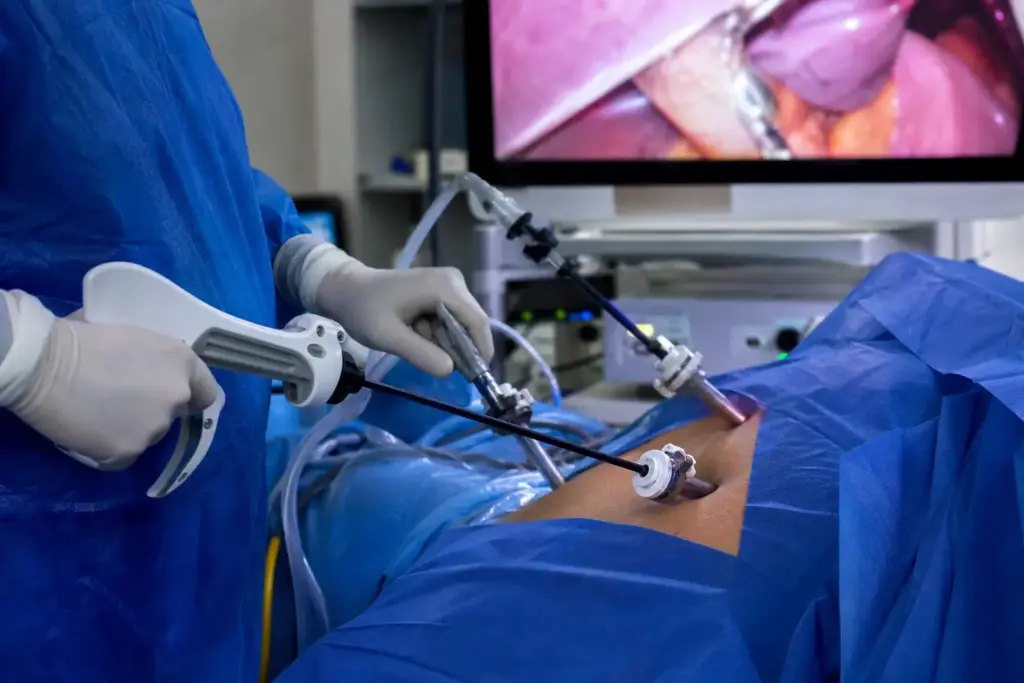
Bariatric surgery, also called weight loss surgery, makes the stomach smaller so you feel full sooner and eat less. It is a treatment for people living with severe obesity, and it can also help health problems linked to weight, such as type 2 diabetes and high blood pressure. Weight loss surgery Essex referrals to Mr Jayanthi can come from your GP or from you directly.
Consultant upper GI and bariatric surgeon Mr Naga Venkatesh Jayanthi offers sleeve, bypass, band and revision operations. Every operation follows a full team assessment and comes with long-term aftercare.
| Question | Answer |
|---|---|
| What is it? | Keyhole surgery to reduce the size of the stomach |
| Main types | Gastric sleeve, gastric bypass and gastric band |
| Hospital stay | Usually 1 to 2 nights |
| Back to normal activities | Usually after 4 to 6 weeks |
| Aftercare | Diet changes, supplements and lifelong check-ups |
What Is Bariatric Surgery?
The weight loss surgery describes the main types as gastric bypass, gastric band, sleeve gastrectomy and gastric balloon. The operations are done by keyhole surgery under general anaesthetic.
Surgery is a tool, not a quick fix. It works alongside lasting changes to eating, activity and lifestyle, and you need to agree to regular follow-up for the rest of your life. Results vary from person to person, and Mr Jayanthi talks through what is realistic for you.
Who It Helps and When to Get Urgent Help After Surgery
Surgery may be considered when weight is causing serious health problems. After an operation, some symptoms need urgent attention.
| Your symptom | Possible cause | What to do |
|---|---|---|
| Weight affecting health despite diet and activity changes | Severe obesity | Book a consultation or see your GP |
| Snoring with daytime tiredness | Possible sleep apnoea | See your GP |
| Fast heartbeat or fast breathing after surgery | Possible leak or infection | Urgent GP appointment or NHS 111 |
| Severe abdominal pain after surgery | Leak or blocked gut | Call 999 or go to A&E |
| Chest pain or breathlessness with a swollen leg | Blood clot | Call 999 or go to A&E |
| High temperature, shivering or confusion | Infection or sepsis | Call 999 or go to A&E |
Conditions Bariatric Surgery Treats
- Severe obesity: see the obesity condition page.
- Type 2 diabetes: blood sugar control often improves after surgery.
- High blood pressure: may improve as weight falls.
- Sleep apnoea and breathing problems: often linked to excess weight.
- Joint pain and arthritis: less load on the hips and knees.
Before surgery, the specialist team checks your physical health with blood and urine tests, X-rays and scans, looking for problems such as ulcers and hernias. They also look at your eating patterns and your ability to cope with the long-term changes, including taking supplements and attending follow-up. These checks decide whether surgery is suitable and which type would be recommended.
If reflux is a problem before or after surgery, the acid reflux surgery page explains the options. Other operations he offers are on the surgical treatments hub.
Treatment Options in Weight Loss Surgery
Gastric sleeve (sleeve gastrectomy)
About 80% of the stomach is removed, so what is left is a slim, banana-shaped stomach. It usually takes 1 to 3 hours, according to the same linked guidance. It cannot be reversed, and reflux can be more likely afterwards.
Gastric bypass (Roux-en-Y)
A small pouch is made at the top of the stomach and connected further down the small intestine. Food bypasses most of the stomach. It usually takes around 2 hours.
Gastric band
An adjustable band is placed around the top of the stomach to limit how much you eat. It can be adjusted and removed, but needs regular follow-up.
Revision surgery
For people whose earlier weight loss operation needs correcting, converting or adjusting, for example after band problems or weight regain.
Why Patients Choose Mr Jayanthi for Weight Loss Surgery
- Bariatric fellowship: specialist training in weight loss surgery at Musgrove Park Hospital, Taunton.
- Full range: sleeve, bypass, band and revision surgery from one surgeon.
- Team assessment: dietitian, psychological and medical review before any operation.
- Upper GI background: he also treats reflux and hiatus hernia, which matter when choosing between sleeve and bypass.
- Wider roles: founding member of IFSGBI and an AUGIS Council Member.
Am I Eligible for Bariatric Surgery on the NHS?
People often search for the BMI needed for weight loss surgery. The NHS page on why it is done says surgery may be available if your BMI is 40 or more, or between 35 and 40 with a condition that could improve with weight loss, such as diabetes, high blood pressure or breathing problems.
The NHS adds that a BMI under 40 may still qualify for people with a Black African, African-Caribbean, Middle Eastern, Chinese, South Asian or other Asian family background. You must also agree to lifestyle changes and regular check-ups.
NHS availability varies by area, and waiting times can be long. Private surgery is an option if you self-refer, and the same safety checks apply. NICE has also called for more research on surgery outcomes for people from ethnic minority backgrounds, as set out in the NICE overweight and obesity guideline.
Alternatives to Bariatric Surgery
Many people start with diet, activity and behaviour support, through their GP or an NHS weight management service. Some may be offered prescribed treatment by their GP or specialist team. A gastric balloon, placed through the mouth, is a temporary option. Mr Jayanthi can discuss whether surgery or another route suits you.
What Happens With Bariatric Surgery, Step by Step
- Consultation: a 30-minute appointment to discuss your health, weight history, earlier attempts to lose weight and your goals.
- Assessment: blood tests and scans, and reviews by a dietitian and psychologist.
- Preparation: a pre-operative diet plan, often to shrink the liver and make surgery easier.
- Surgery: a keyhole operation under general anaesthetic, then usually 1 to 2 nights on the ward.
- Aftercare: a staged diet, supplements and regular clinic reviews, with dietitian support as your eating changes.
Recovery and Risks After Bariatric Surgery
A stay of 1 or 2 nights is usual. The NHS recovery guide says to start returning to normal activities after 4 to 6 weeks. Mr Jayanthi’s team moves you from liquids to soft food and then a normal diet over about 6 to 8 weeks.
In a typical NHS plan, you drink only fluids such as thin soup for 2 weeks. Puréed and runny foods follow in weeks 3 and 4, then soft foods like mashed potato until week 8, before a balanced diet returns. Eat slowly, chew well, keep portions small and take vitamin and mineral supplements for life.
Follow-up is lifelong, usually in a specialist clinic for at least the first 2 years and then a yearly check with your GP. Avoid pregnancy for 12 to 18 months while weight settles, and be aware that fertility can rise as you lose weight.
Food can get stuck if the new stomach or join narrows. To lower the risk, cut food into small pieces, chew well and avoid drinking with meals. An exercise plan, built up slowly, helps protect muscle as weight falls. Emotional support is part of follow-up, as eating and body image can feel very different after surgery.
The NHS complications page lists blood clots, a leak from the stomach join, wound infection, a narrowed or blocked gut, gallstones, band slipping and loose skin. Low iron, vitamin B12 and vitamin D are also possible, which is why blood tests continue. Rarely, a keyhole operation has to become open surgery.
| Treatment | Hospital stay | Example risk |
|---|---|---|
| Gastric sleeve | Usually 1 to 2 nights | Reflux or leak |
| Gastric bypass | Usually 1 to 2 nights | Low vitamins or blocked gut |
| Gastric band | Often 1 night | Band slipping |
| Revision surgery | Often 2 nights or more | Leak or bleeding |
Where Mr Jayanthi Sees Weight Loss Surgery Patients
Weight loss surgery Essex consultations are held at 3 hospitals. Private consultations run at Springfield Hospital, Chelmsford (Monday, Wednesday, Friday) and Oaks Hospital, Colchester (Saturday). His NHS clinic at Broomfield Hospital runs on Mondays for patients referred by a GP. Contact the secretaries on 01245 234412 for further details.
Clinic hours, in UK local time, are Monday 6:00–8:00pm, Wednesday 2:00–7:00pm and Friday 2:00–4:30pm. Contact the secretaries for further details.
| Location | Address |
|---|---|
| Springfield Hospital, Chelmsford, private clinic | Lawn Lane, Springfield, Chelmsford, Essex CM1 7GU |
| Oaks Hospital, Colchester, private clinic | 120 Mile End Road, Colchester CO4 5XR |
| Broomfield Hospital, Chelmsford, NHS clinic | Court Road, Broomfield, Chelmsford CM1 7ET |
Bariatric Surgery Fees and Insurance
Consultations are from £250 and follow-up appointments from £150, confirmed when you book. Surgery is quoted as a written self-pay package after assessment, and the quote sets out what aftercare is included, such as dietitian reviews and follow-up clinics. Ask for the 2026 price in writing.
| Item | Fee |
|---|---|
| Initial consultation | From £250 |
| Follow-up appointment | From £150 |
| Treatment or surgery | Self-pay package quoted in writing after your consultation |
| Insured patients | Bupa, AXA Health, Aviva, Vitality, Cigna, Allianz, Healix, WPA and other UK insurers. Check your policy |
FAQs About Bariatric Surgery
How long is recovery after bariatric surgery?
Expect 1 or 2 nights in hospital, then a return to everyday activities after 4 to 6 weeks. The diet moves back to normal over about 8 weeks.
When can I drive after weight loss surgery?
Not until you can wear a seatbelt comfortably and brake hard without pain. That point is often reached in the second week.
Is bariatric surgery a major operation?
Yes. It is done by keyhole surgery, but it changes how you eat for life and needs a general anaesthetic and lifelong follow-up.
Can weight come back after surgery?
Yes, some weight can return, especially if eating habits drift. Regular follow-up and support help, and revision surgery is sometimes an option.
Are there alternatives to surgery?
Yes. Diet, activity and behaviour support, prescribed treatment from your GP or specialist team, or a gastric balloon may suit some people.
How much does private bariatric surgery cost?
It depends on the operation and the aftercare package. A written self-pay quote is given after your assessment.
How do I choose between a sleeve and a bypass?
Mr Jayanthi weighs up your BMI, medical conditions and eating habits. Reflux, for example, may make a bypass more suitable than a sleeve.
Will I need to take supplements?
Yes. Vitamin and mineral supplements are needed for life, with regular blood tests to check your levels.
Can I get pregnant after bariatric surgery?
Avoiding pregnancy for 12 to 18 months after surgery is advised, until your weight has stabilised.
Can a gastric band be removed?
Yes. A band can be adjusted or removed, and it can be converted to another operation if needed.
Book a Consultation About Bariatric Surgery
Start with the appointment booking page, send a note through the contact page or call 01245 234412. After surgery, a fast heartbeat, fever or worsening abdominal pain needs NHS 111 or your GP the same day. Severe pain, chest pain or signs of sepsis mean 999 or A&E.