
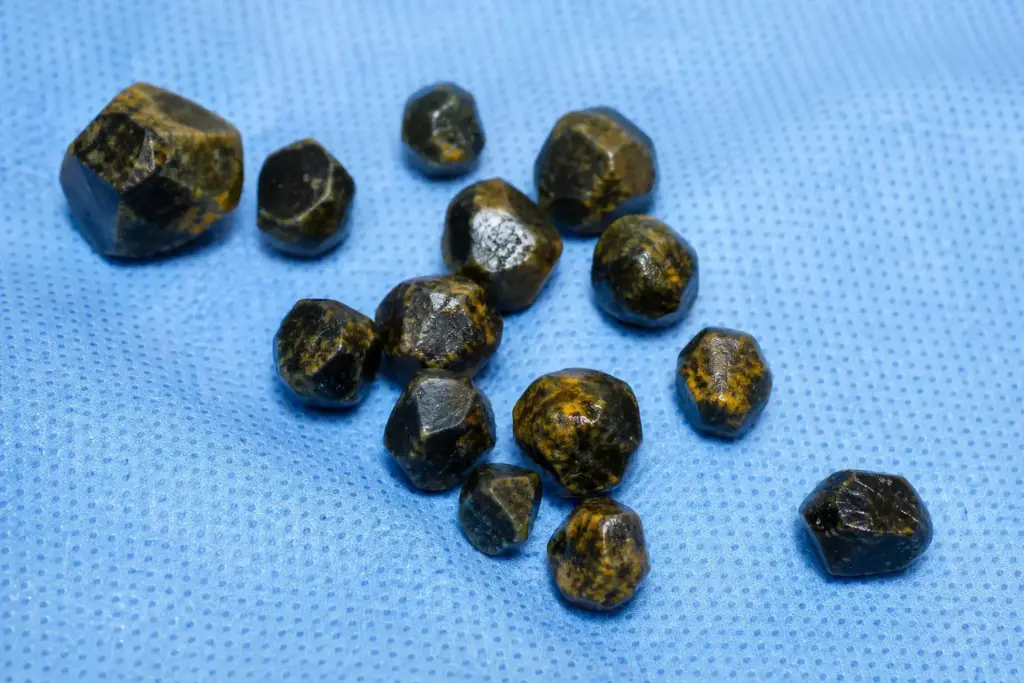
What Are Gallstones?
Gallstones are formed in the gallbladder when the gallbladder doesn’t work normally. They may be formed from cholesterol, bile pigment, or a combination of both. They come in various shapes and sizes from tiny gravel-like particles to stones the size of a golf ball.
Gallstones are extremely common, affecting approximately one in ten adults in the UK. They are more common in women, people over 40, and those who are overweight.
What Are the Symptoms?
Gallstones may not cause any symptoms and may be found by chance on a scan. When gallstones do cause symptoms, they typically include:
- Sudden, severe pain in the upper right abdomen (biliary colic)
- Pain that spreads to the back or right shoulder
- Nausea and vomiting
- Indigestion, bloating, and intolerance to fatty foods
- Jaundice (yellowing of the skin and eyes) if a stone blocks the bile duct
- Fever and chills if infection develops (cholecystitis)
- Pancreatitis — inflammation of the pancreas caused by a gallstone blocking the pancreatic duct
Diagnosis
All patients with symptoms suggestive of gallstones need an ultrasound scan. This is usually the first and often only investigation required. In cases where a stone may have passed into the bile duct, an MRI scan (MRCP) or endoscopic ultrasound may be performed.
Treatment
Gallstones that are not causing symptoms don’t need treatment. If they start giving symptoms, an operation to remove the gallbladder (laparoscopic cholecystectomy) is required.
Mr Jayanthi performs keyhole gallbladder surgery as a day-case procedure. He also offers a specialist one-stop service for patients presenting with jaundice or pancreatitis caused by gallstones.