
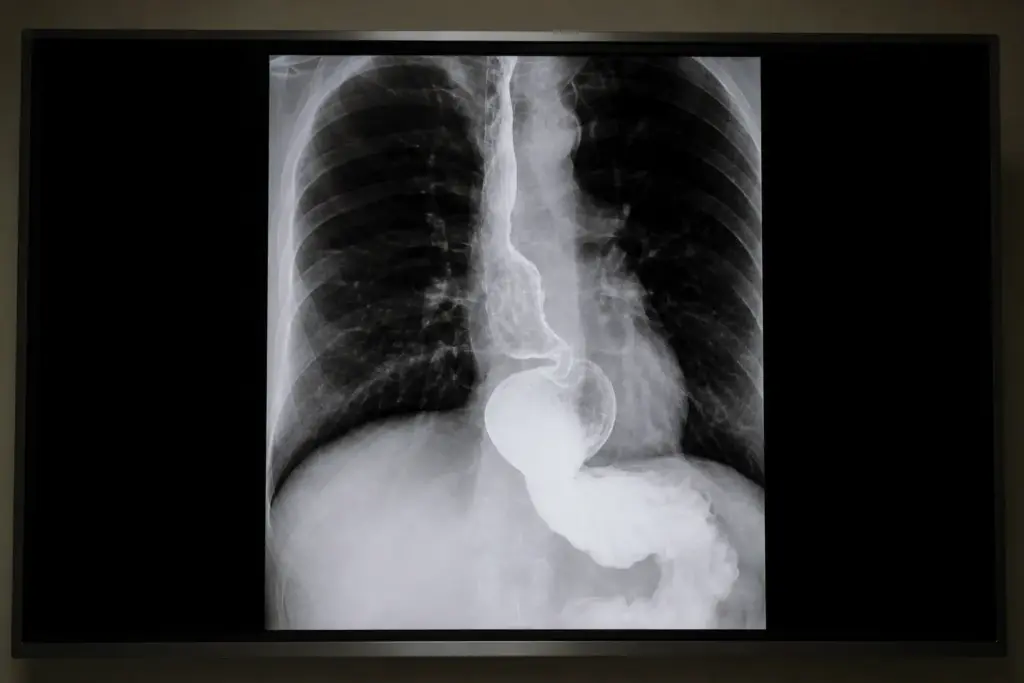
What is a Hiatus Hernia?
A hiatus hernia occurs when part of the stomach pushes up through an opening in the diaphragm (the hiatus) into the chest cavity. A small hiatus hernia is common and may cause no problems, but larger hernias can allow food and acid to back up into the oesophagus.
Hiatus hernias are more common in people over 50, those who are overweight, and in smokers.
What Are the Symptoms?
Symptoms of a hiatus hernia include:
- Persistent heartburn and acid reflux
- Regurgitation of food or liquid into the mouth
- Difficulty swallowing (dysphagia)
- Chest pain or discomfort, especially after eating
- Feeling full quickly after eating
- Belching and bloating
- Shortness of breath in large hernias
Diagnosis
A hiatus hernia is usually diagnosed with an upper GI endoscopy or barium swallow X-ray. Mr Jayanthi may also arrange oesophageal manometry and 24-hour pH monitoring to assess the severity of reflux and plan the most appropriate surgical approach.
Treatment
Small, asymptomatic hiatus hernias may require no treatment. For patients with significant symptoms, surgery is the only way to correct the underlying problem.
Mr Jayanthi performs laparoscopic (keyhole) hiatus hernia repair restoring the stomach to its correct position and performing a fundoplication to prevent reflux. He provides this service independently and as a RefluxUK specialist partner.